



A good plan starts with checking the opponent’s reply
Your own idea is only the beginning of analysis. In draughts training, planning the arrangement of your pieces can be paired with checking how the opponent might answer your next move.
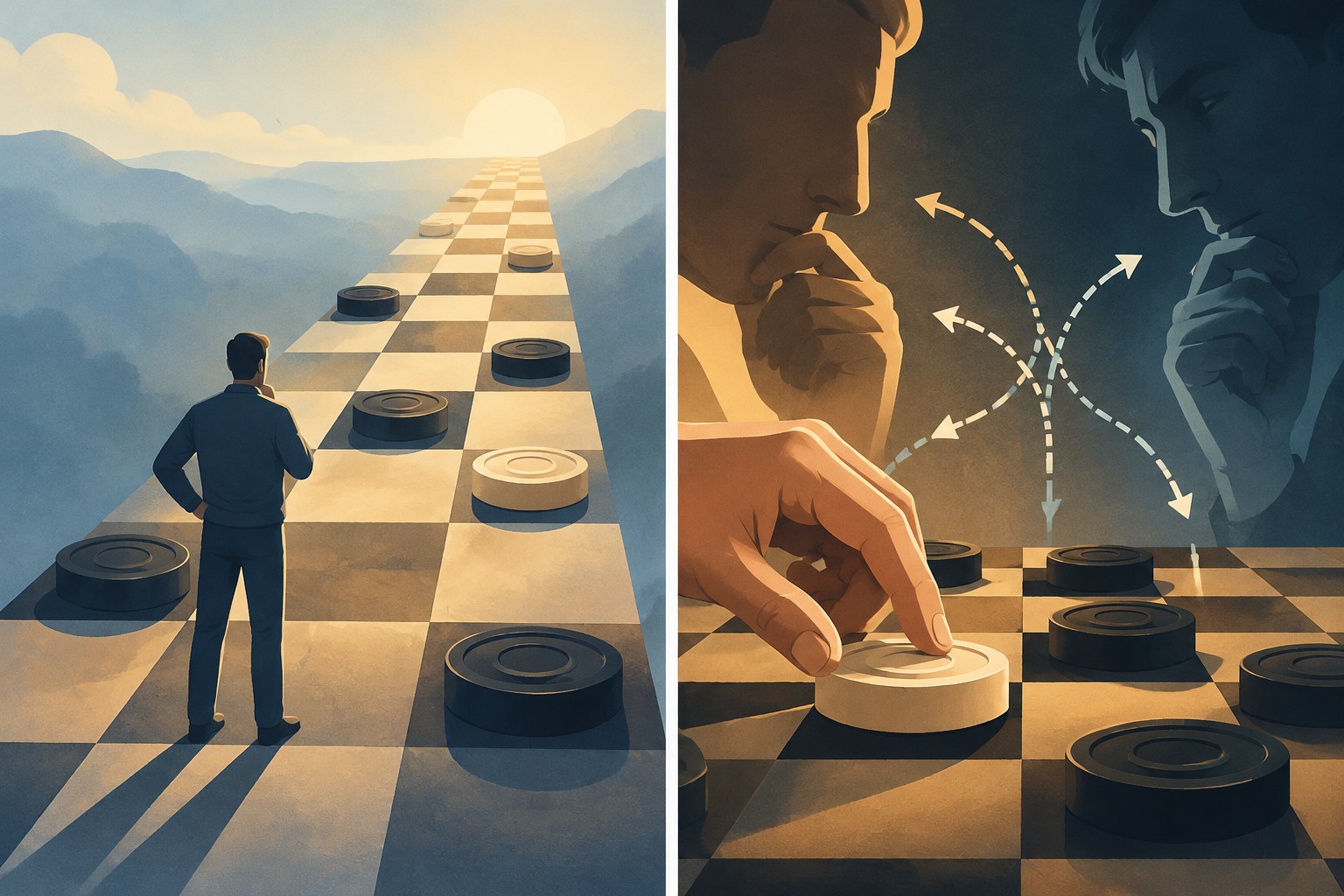
A plan can look convincing while we consider only our own intentions. We want to improve the arrangement of our pieces, prepare another move and gradually reach the position we have in mind. Yet there is an opponent across the board, making decisions too. A useful starting point for training is therefore the question: what might they play in reply? This is general draughts learning advice, independent of the detailed rules of individual variants.
Tactics and strategy describe different aspects of play. Tactics concerns combinations, while strategy concerns the longer-term arrangement of pieces. When examining an idea, it is worth considering both: the intended direction of play and the concrete consequences of the next decision. Describing a goal does not replace checking what happens after a move.
A simple exercise can begin by stating the intention in one sentence. Rather than constructing an elaborate story about a future position, the aim is to identify clearly what the proposed move should change. Then comes the view from the other side: which opponent’s reply would make that intention hardest to carry out? This exercise does not assume that the opponent will choose the move most convenient for our plan.
The next stage is to compare the intention with the anticipated reply. Would we still want to pursue the same idea afterwards? Would we need to change the order of our actions or reassess the arrangement of the pieces? Analysis does not always have to end with rejecting the first choice. Its purpose here is to test an idea, not justify it at any cost.
A short training note might contain three elements: our goal, a possible opposing reply and our assessment of the plan after that reply. This provides material for comparison with the game later. It requires neither extensive commentary nor a prediction of the entire game. Recording the decision and our expectations is enough. The distinction matters: writing down a goal does not mean we have found a way to achieve it.
Regular play offers opportunities for this work, and reviewing mistakes is part of learning. Afterwards, we can revisit a decision and compare the anticipated reaction with the opponent’s actual reply. If it surprised us, we can describe what was missing: noticing the possibility itself or assessing its consequences. A defeat can then become material for another exercise.
A good plan need not be a long list of our own moves. In this training approach, it is an idea put to the test: it has a goal, considers the other side’s reply and remains open to revision. The essential shift is to pair a question about our own intention with another: what can the opponent do about it?